Yelp Alternatives for Promoting Greenville Happy Hour Specials

Short answer
For Greenville bars and restaurants, the best Yelp alternative is not one replacement directory. Keep Yelp accurate for reputation and general discovery, then add channels built for specific jobs:
- Google Business Profile to get found in search and on maps.
- Direct messages (email, text, social) to reach your regulars.
- Happy Hour Flower for timely deal discovery. It’s a Greenville app where locals look for happy hours and specials, and where you can list yours and update them as they change. Free listings get your venue on the map, and Premium adds featured placement and analytics. Learn more at happyhourflower.com.
Yelp tells people who you are. Happy Hour Flower tells them what’s on tonight.
Key takeaways
- Yelp can remain part of a venue’s local presence, but it should not be the only place a changing special appears.
- Google Business Profile is a useful foundation for Maps and Search visibility, although its content rules matter for alcohol-related offers.
- Direct email, text, and social updates are best for people who already know the venue.
- Happy Hour Flower is a Greenville-focused specials app built for people actively looking for a deal by day, time, place, or offer type. Venues can list for free and update specials as they change.
Table of contents
- Where Yelp fits—and where it falls short for specials
- Compare channels by the job they do
- When a specialized local platform earns its place
- Build a promotion stack for current specials
- Run a simple 30-day test
- Frequently asked questions
If a special changes by the day, hour, or inventory available, it needs more than a permanent business listing. The practical approach is to keep Yelp up to date, then publish the same accurate offer through the channels that can help a nearby customer discover it at the right moment.
Where Yelp fits—and where it falls short for specials
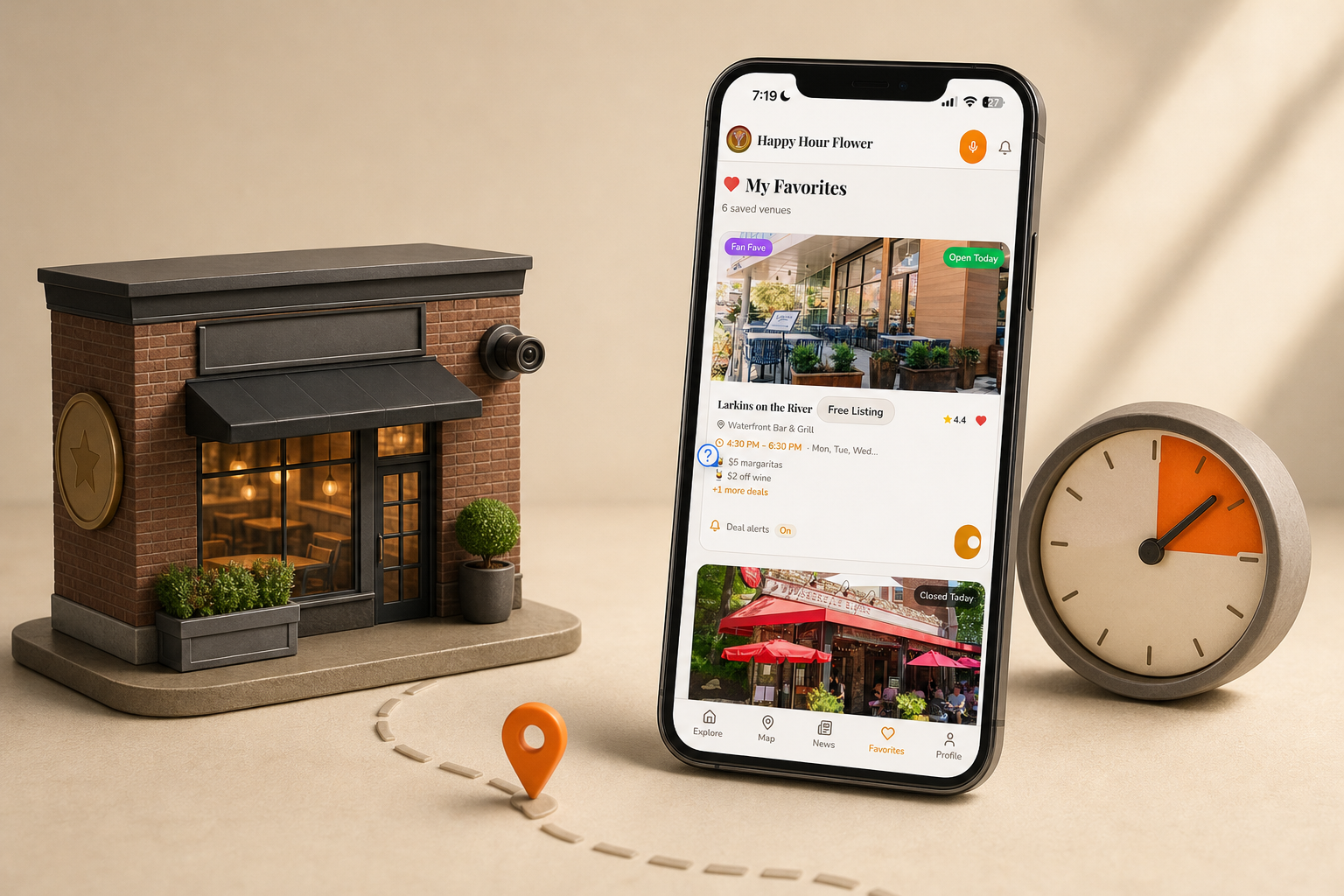
Yelp still has a role. A complete listing, current hours, useful photos, accurate contact information, and thoughtful review responses can help a customer researching where to go. That is a different job from getting attention for a Thursday-only appetizer offer or a happy hour ending at 6 p.m.
For time-bound promotions, decide what must happen next:
- A new customer needs to find the venue. Prioritize local search and maps visibility.
- A regular needs a reminder. Use an opt-in audience such as email, text, or social followers.
- A deal-seeker needs to compare active offers. Use a local platform designed around current specials, timing, and location.
The important distinction is not Yelp versus every other platform. It is a general venue-research experience versus a promotion workflow that keeps details such as the day, time window, exclusions, and eligible items easy to find.
Compare channels by the job they do
No single channel should carry every part of a venue's promotion strategy. This compact comparison can help Greenville operators decide where to spend their time first.
| Channel | Best job | Use it for | Main limitation |
|---|---|---|---|
| Yelp | General restaurant research and reputation | Keeping venue details, photos, and customer-facing information current | A listing alone is not a dependable operating system for every changing special |
| Google Business Profile | Search and Maps discovery | Accurate location details and compliant updates that help customers decide to visit | Promotional content must follow Google's content policies |
| Direct channels | Reaching existing followers and guests | Same-day reminders, newsletters, text alerts, and social updates | They mainly reach people who have already opted in or followed |
| Happy Hour Flower | Deal-specific local discovery | Publishing current Greenville happy hours and food-and-drink offers for people browsing by time and location | It is locally focused rather than a nationwide replacement for every listing channel |
Google Business Profile is a sensible baseline because businesses can publish Updates, Offers, and Events that may appear in Search and Maps. Google also allows scheduling and recurring posts. However, its guidance says posts for regulated industries may not include content about alcohol products. For a special centered on discounted cocktails, that restriction may make Google less suitable for carrying every product-level detail. Review the current Google Business Profile posting guidance before publishing. (support.google.com)
Use Google for accurate local presence, but do not assume a map listing can replace a detailed, current special listing. The offer still needs a clear destination where a customer can see what is included, when it runs, and whether it fits their plans.
When a specialized local platform earns its place
A specialized platform becomes useful when the offer itself is the reason a person is searching. Someone looking for an after-work deal is not only choosing a restaurant; they are comparing timing, distance, neighborhood, deal type, amenities, and whether the special is happening now.
For Greenville venues, Happy Hour Flower's venue tools are designed around that decision. The current venue page describes map visibility, special promotion, neighborhood and time-window targeting, alerts, and engagement reporting. Available features depend on the selected plan, so operators should confirm the details that matter before subscribing. (happyhourflower.com)
The consumer side matters too. Happy Hour Flower says local users can browse food and drink specials by day, time, neighborhood, and type of special, save favorite venues, and receive nearby-deal notifications. That makes it a better fit for a venue whose immediate goal is to put a current offer in front of Greenville deal-seekers, rather than simply collect a long-term profile view. (happyhourflower.com)
This is not a reason to abandon Google, Yelp, or an owned audience. It is a reason to give each channel a defined role.
Build a promotion stack for current specials
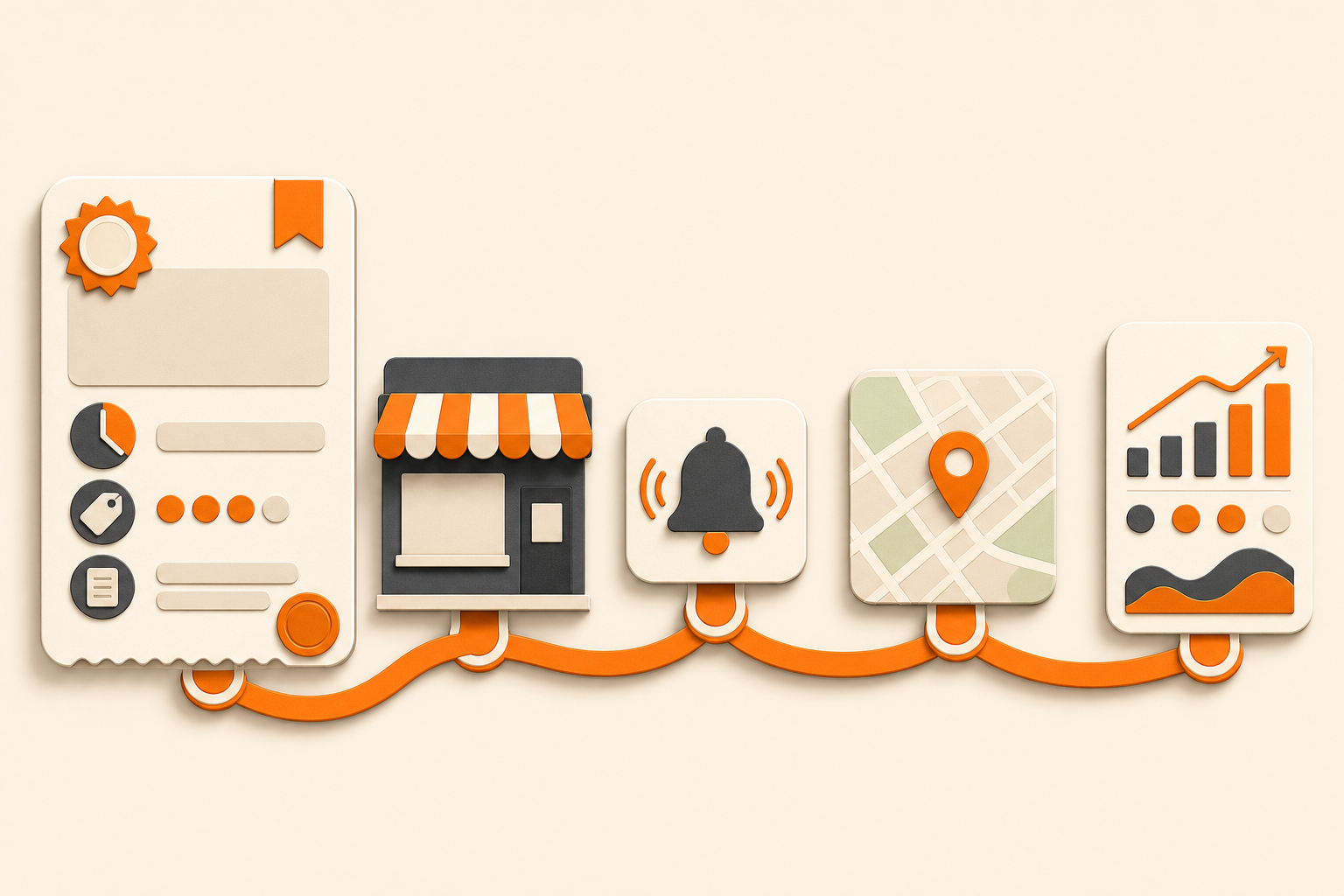

A good promotion stack starts with one accurate source of offer details, then distributes that information in a way each audience can use.
- Write the offer clearly. Include the days, start and end times, eligible items, price or discount, location, and meaningful exclusions.
- Keep core listings accurate. Check the venue name, address, hours, website, reservation links, menu links, and photos wherever customers may research the business.
- Use direct channels for urgency. Send a concise reminder to people who have opted in, especially when a limited-time offer changes the usual schedule.
- Publish on a specials-focused local destination. Make the active deal searchable by the details customers use to decide where to go.
- Review what happened. Track the actions each channel can actually show, then repeat what produces useful attention rather than relying on assumptions.
For an operator with little time, start with the free listing option before adding paid visibility. Happy Hour Flower's current venue pricing page says the free tier includes a basic listing, happy-hour and deal setup, and search-and-map appearance; paid plans add capabilities such as featured placement and performance analytics. See the current venue plans and pricing rather than relying on old screenshots or third-party summaries. (happyhourflower.com)
Run a simple 30-day test
Do not judge every channel by impressions alone. Use one recurring special for 30 days and keep the offer wording consistent across places.
Create a small scorecard with:
- The special name and exact hours
- Where it was published
- The date and time each update went live
- Clicks, saves, messages, views, or redemptions that the platform reports
- Staff observations, such as whether guests mentioned the offer or arrived during a slower period
At the end of the test, ask three questions:
- Did the channel put the offer in front of people likely to act soon?
- Could the venue update the information quickly when something changed?
- Did the available reporting help the team make a better next decision?
That approach is more useful than looking for a universal winner. Yelp may remain worthwhile for one job, while Google, direct outreach, and a local specials platform handle other parts of the customer journey.
Frequently asked questions
Should a Greenville restaurant stop using Yelp?
Not necessarily. Keep the Yelp listing accurate if customers use it to research the venue. The better question is whether Yelp alone can communicate the changing details of your specials as clearly and promptly as your business needs.
Is Google Business Profile enough for promoting happy hour?
Google Business Profile is an important local-search foundation, and Google supports posts for updates and offers. But venues should check current policies before using it for alcohol-related product details, because Google identifies alcohol as a regulated industry for post-content purposes. (support.google.com)
What is the best channel for a same-day special?
Use the channel that reaches the intended audience fastest while keeping the information accurate. For regulars, an opt-in direct message may be appropriate. For local people actively searching for a deal, a current special on a local discovery platform can be more relevant.
Can a venue start with Happy Hour Flower for free?
Yes. Happy Hour Flower's current venue-pricing page describes a free plan with a basic listing, happy-hour and deal setup, and visibility in search and the map. Review the live plan page for current inclusions before making a purchase decision. (happyhourflower.com)
For Greenville venues that want a deal-focused complement to Yelp and Google, start on the venue-owner path and decide whether the free listing provides the right first step for your current specials.
Related articles

Happy Hour Promotion Metrics: What to Track and Why
Track impressions, listing views, saves, directions, clicks, calls, and redemptions to see whether a happy hour promotion creates real visit intent.

Where to Find Lunch Specials in Greenville, SC
Find Greenville lunch specials worth checking today, compare deal types, and use a quick method to confirm prices, hours, and availability before lunch.

Google Maps vs. Yelp for Finding Happy Hour Deals
Compare Google Maps and Yelp for happy hour: what each can tell you, what they cannot, and how to verify today’s deal before you go.